
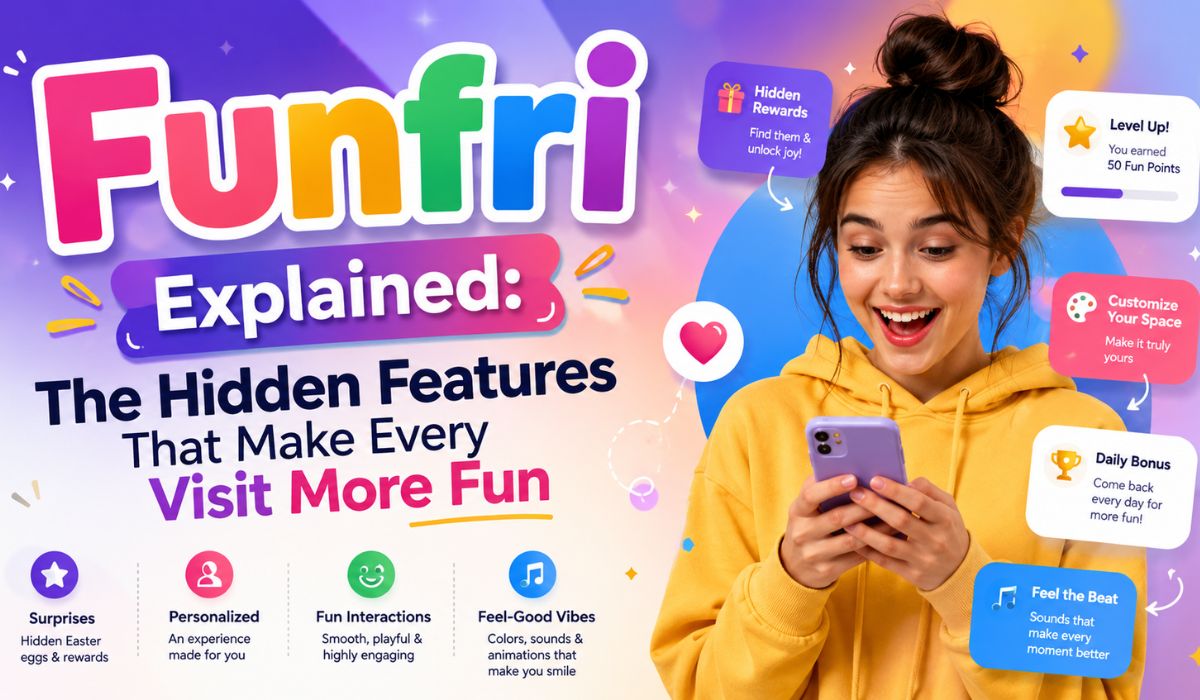
Introduction: Why Funfri Feels Different
Some digital experiences disappear from memory the moment users close the page. Others leave people smiling and wondering why they enjoyed something so much. Funfri belongs to the second group.
At first glance, Funfri appears playful, colorful, and easy to use. But when people spend more time exploring it, they often notice something interesting: every action feels smoother, every interaction feels lighter, and every visit somehow feels more enjoyable than expected.
That reaction rarely happens by accident.
Behind Funfri’s cheerful appearance are many small design decisions that work together to create an experience that feels natural, welcoming, and surprisingly memorable. The hidden features are not necessarily giant tools or dramatic surprises. Instead, they are thoughtful details built into movement, visuals, interaction, personalization, timing, and feedback.
This article explores those hidden details and explains why Funfri creates an experience people remember long after they leave.
What Is Funfri And Why Are People Talking About It?
Funfri can best be understood as an experience built around engagement, comfort, and playful interaction rather than complexity.
People are increasingly drawn to digital spaces that feel enjoyable instead of overwhelming. Modern users want environments that respond quickly, feel intuitive, and offer moments of delight during normal use.
Funfri appears to embrace this approach.
Rather than pushing endless features onto visitors, it creates experiences that feel lighter and more approachable. Every interaction seems designed to remove friction and make users feel rewarded for exploring.
That balance between simplicity and enjoyment is one reason people continue talking about Funfri.
The Hidden Features That Make Funfri Feel More Interactive
One reason Funfri feels different is that interaction never feels empty.
When users tap, click, move, or explore, the system appears to respond immediately. Small visual reactions create a feeling that actions matter.
This approach follows a widely used user experience principle called feedback design.
When interfaces provide clear reactions to user actions, people feel more confident and more connected to what they are doing.
Funfri seems to apply this idea in subtle ways.
Buttons appear active. Movements feel smooth. Transitions connect one action to another.
Users may never consciously notice these details, yet they shape the overall experience.
How Small Animations Create Big Emotional Reactions
Animation is often misunderstood.
Many people think animation exists only to make products look attractive. In reality, good animation improves understanding and creates emotional comfort.
Funfri appears to use animation as communication.
Soft motion helps users understand what changed, what moved, and what happened after an action.
Small effects can make digital environments feel alive.
Modern interaction studies regularly show that carefully designed motion reduces confusion and increases engagement because users receive immediate visual confirmation.
Funfri’s playful energy likely comes from these small moments rather than large visual effects.
Funfri’s Surprise Elements And The Joy Of Discovery
One of the strongest emotional tools in digital design is surprise.
Funfri appears to use hidden discoveries to encourage curiosity.
Unexpected details create memorable experiences because users feel they found something personally.
Psychologists sometimes describe this as reward anticipation. Small unexpected rewards often feel more enjoyable than expected rewards.
That does not require major prizes.
A hidden interaction, a playful response, or a small visual change can be enough to create delight.
This style of discovery transforms ordinary visits into experiences people want to revisit.
Personalization Makes Every Visit Feel More Unique
People enjoy experiences that feel relevant to them.
Personalization is not only about recommendations. It is about creating familiarity.
Funfri appears to create this feeling by making interactions feel responsive and adaptive.
When users feel recognized, engagement naturally increases.
Good personalization usually includes:
remembered choices, smoother navigation, reduced repetition, and content that feels connected to previous behavior.
The goal is not to overwhelm users with customization but to make experiences feel easier and more natural.
The Role Of Colors And Visual Atmosphere
Visual design strongly affects emotions.
People often respond to environments before they consciously evaluate them.
Warm colors can create energy.
Soft colors can create calm.
Balanced spacing reduces mental overload.
Funfri seems to rely on visual comfort rather than visual intensity.
The result is an environment that encourages people to stay longer without feeling exhausted.
This reflects broader design trends in 2026, where comfort and readability increasingly matter more than flashy visuals.
How Sound Makes Funfri More Enjoyable
Sound often receives less attention than visuals, but audio has powerful effects.
Short sounds can confirm actions.
Ambient sound can support mood.
Reward sounds can create emotional satisfaction.
Funfri appears to use audio as reinforcement rather than distraction.
The best digital experiences usually treat sound as invisible support instead of constant stimulation.
When done well, users feel the effect without focusing on it directly.
The Psychology Behind Why Funfri Makes People Smile
People smile during enjoyable experiences for many reasons.
Progress feels rewarding.
Discovery feels exciting.
Smooth interaction feels satisfying.
Positive surprises create emotional responses.
Funfri appears to combine these factors.
Researchers in user experience often describe delight as the result of expectations being exceeded in small ways.
People do not always remember features.
They remember how an experience made them feel.
What Funfri Teaches About Great User Experience
Funfri highlights an important lesson.
More features do not automatically create better experiences.
Strong experiences often come from:
clarity,
comfort,
fast feedback,
pleasant design,
and meaningful interaction.
Many successful products follow this principle.
People return because things feel easy and enjoyable.
Funfri shows how thoughtful design choices can become more valuable than complicated systems.
Why Hidden Details Matter More Than Big Features
Large features attract attention.
Small details create loyalty.
Tiny improvements repeated across an experience often influence satisfaction more than major updates.
Funfri demonstrates this idea well.
Smooth transitions.
Clear responses.
Comfortable visuals.
Unexpected moments.
These elements work quietly but consistently.
How Users Can Get More Out Of Funfri
Exploration matters.
Users who move slowly and pay attention often notice more enjoyable details.
Experiment with interactions.
Notice animations.
Look for changes.
Try customization features.
Observe visual and audio responses.
Many enjoyable experiences become visible only after repeated visits.
The Future Of Experiences Like Funfri In 2026
Digital design continues moving toward emotional usability.
The goal is becoming simpler:
make experiences useful,
comfortable,
and enjoyable.
People increasingly value products that reduce stress instead of increasing stimulation.
Funfri reflects this shift.
As design evolves, hidden features may become even more important than visible ones.
Final Thoughts
Funfri reminds us that memorable experiences rarely come from one dramatic feature.
Instead, they emerge from many thoughtful decisions working together.
Animation makes movement feel natural.
Personalization creates connection.
Surprises reward curiosity.
Visual design supports comfort.
Sound creates emotion.
These hidden features transform ordinary moments into experiences people enjoy returning to.
That may be the real secret behind Funfri.
Not that it tries harder to entertain people.
But that it quietly makes every visit feel a little more enjoyable.
FAQs About Funfri
What Makes Funfri Different From Other Experiences?
Funfri focuses heavily on emotional experience and interaction quality rather than overwhelming users with complexity.
Does Funfri Use Hidden Features Intentionally?
Many enjoyable experiences intentionally include small interactive details that improve engagement and create discovery moments.
Why Do Small Animations Matter?
Animations provide feedback, improve clarity, and make interfaces feel more natural.
Is Personalization Important In Funfri?
Personalization can help users feel more connected and make experiences feel smoother.
Why Do People Return To Funfri?
Users often return because enjoyable details create memorable experiences.
Does Sound Really Affect Enjoyment?
Yes. Audio feedback supports emotion, confirmation, and immersion.
Are Surprise Elements Good Design?
When balanced carefully, surprises encourage curiosity and make experiences more memorable.
What Is The Biggest Lesson From Funfri?
Small thoughtful details often create stronger experiences than large feature lists.
Recommended For You: Survival Race Explained: How To Play, Survive Longer, And Win Every Match