
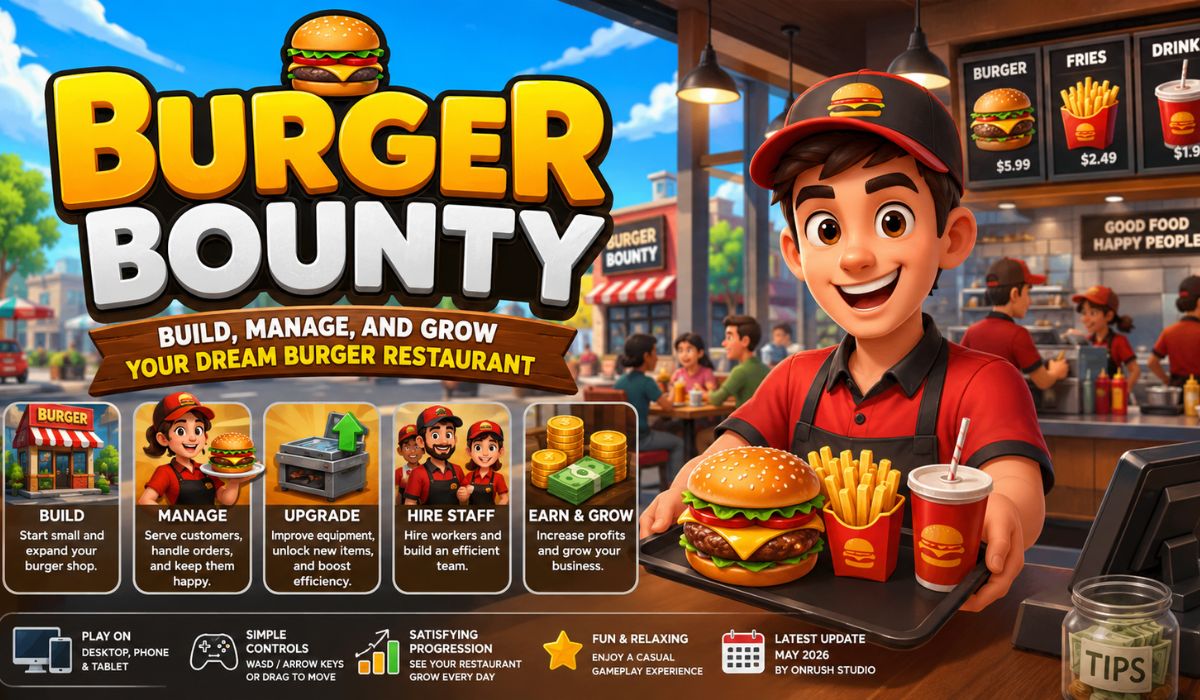
Restaurant simulation games continue to attract players because they combine creativity, strategy, and satisfying progress into one experience. Among newer entries in the genre, Burger Bounty stands out by turning a simple burger stand into a growing business adventure that feels rewarding from the very first minutes.
Burger Bounty is a management and simulation game where players become restaurant owners and slowly transform a small operation into a busy burger destination. Instead of overwhelming players with complicated systems, the game introduces business growth step by step. You begin alone, take customer orders, prepare meals, collect payments, and reinvest profits into expansion.
What makes Burger Bounty especially enjoyable is its balance between accessibility and progression. It is easy to understand but still creates meaningful decisions about upgrades, staffing, and efficiency. Whether someone enjoys simulation games, tycoon experiences, or casual management gameplay, Burger Bounty offers a smooth experience that keeps players engaged.
This guide explores every major part of Burger Bounty, including gameplay systems, growth mechanics, business management, controls, useful strategies, and what makes the experience worth trying in 2026.
Quick Bio Information
| Information | Details |
|---|---|
| Game Name | Burger Bounty |
| Genre | Simulation Game |
| Core Style | Restaurant Management |
| Developer | OnRush Studio |
| Release Year | May 2023 |
| Latest Update | May 2026 |
| Current Status | Live |
| Gameplay Type | Single-Player Management |
| Main Goal | Build A Successful Burger Restaurant |
| Starting Role | Owner And Worker |
| Progress System | Earn, Upgrade, Expand |
| Controls | WASD And Arrow Keys |
| Mobile Controls | Drag Movement |
| Supported Devices | Desktop, Phone, Tablet |
| Difficulty Level | Beginner Friendly |
| Business Elements | Staffing And Upgrades |
| Session Length | Short To Medium |
| Player Focus | Growth And Efficiency |
What Is Burger Bounty?
Burger Bounty is built around one simple but effective idea: start small and grow steadily. Players enter the game as the owner of a modest burger restaurant with very limited resources. Every customer served becomes part of a larger journey toward expansion.
Unlike traditional cooking games that mainly focus on speed, Burger Bounty emphasizes business decisions. Players do not simply prepare food. They manage workflow, organize upgrades, improve service speed, and decide when to expand.
This approach creates a stronger sense of ownership. Every improvement feels earned because growth comes directly from player decisions rather than scripted progression.
Start Your Journey As A One-Person Burger Business
The opening stage of Burger Bounty creates an experience that feels personal and rewarding. At first, the player handles nearly everything manually.
Customers arrive, orders must be completed, and movement around the restaurant becomes part of daily operations. Since resources are limited, players learn efficiency naturally.
The early game introduces important habits. Players quickly discover that faster service leads to more revenue, and smarter spending creates long-term growth.
This opening phase also makes later expansion feel meaningful because players remember where they started.
How Burger Bounty Gameplay Works
Burger Bounty follows a satisfying gameplay loop that combines action and planning.
Players serve customers, collect income, invest earnings, and repeat the process while scaling operations. The challenge grows gradually as customer demand increases.
Unlike many simulation titles that rely heavily on menus, Burger Bounty encourages active participation. Movement, timing, and positioning all affect restaurant performance.
As business expands, players shift from direct work into management and optimization.
Build And Expand Your Dream Burger Restaurant
Expansion is one of the strongest parts of Burger Bounty.
Growth usually starts with improving service areas and gradually adding operational capacity. Every upgrade changes how the restaurant feels and performs.
Expansion decisions matter because investing too early can create bottlenecks, while waiting too long can slow profit growth.
Successful players often create a rhythm of earning, upgrading, and improving efficiency before moving to the next stage.
Hire Employees And Create An Efficient Team
One of the biggest turning points in Burger Bounty happens when employees enter the business.
Hiring transforms gameplay from doing everything manually into managing a growing operation.
Staff members reduce repetitive tasks and allow players to focus on expansion. This creates an interesting shift where strategic planning becomes more important than movement speed.
Building an effective team is often more valuable than expanding too quickly.
Manage Resources And Increase Your Profits
Money management plays an important role throughout the experience.
Every earned reward becomes a choice between immediate improvements and long-term growth.
Players who spend carefully often progress faster because efficient upgrades improve customer flow and increase future earnings.
This business layer gives Burger Bounty more depth than many casual restaurant games.
Controls, Devices, And Accessibility
Burger Bounty remains approachable because controls are simple.
Desktop players use arrow keys or WASD movement, while mobile users navigate through drag controls.
The straightforward control system lowers the learning curve and allows players to focus on gameplay decisions instead of memorizing complex mechanics.
Because it supports desktop, phones, and tablets, the game works well for short sessions or longer play periods.
Features That Make Burger Bounty Fun To Play
Burger Bounty succeeds because it creates visible progress.
Every improvement changes how the restaurant looks and operates. Customers move faster, workflows improve, and the business gradually feels larger.
This sense of momentum creates satisfying gameplay without requiring complicated systems.
The combination of management, progression, and accessibility helps the experience remain engaging over time.
Beginner Tips To Grow Faster In Burger Bounty
Success in Burger Bounty rarely comes from rushing. The game rewards steady improvement and thoughtful decisions more than constant expansion.
One of the smartest approaches for beginners is to focus on efficiency before size. Improving customer service speed often creates more value than unlocking new areas too early. Faster service means more completed orders, and more completed orders lead to stronger income.
Another useful strategy is creating a simple upgrade cycle. Earn money, improve one area, test performance, and then expand. This prevents situations where the restaurant becomes larger but harder to manage.
New players also benefit from paying attention to movement patterns. Since Burger Bounty includes active restaurant management, reducing unnecessary movement saves time and improves productivity.
As staff become available, delegation becomes increasingly important. Players who balance personal involvement with automation often progress more smoothly.
Challenges Players May Face During Expansion
Expansion feels exciting, but Burger Bounty becomes more demanding as operations grow.
A common challenge appears when customer demand increases faster than restaurant capacity. Long waiting times reduce efficiency and can slow overall growth.
Another obstacle comes from uneven investment. Spending too much in one area while ignoring others can create operational bottlenecks. For example, faster service areas still struggle if customer handling remains slow.
The game also encourages patience. Rapid upgrades may look attractive, but balanced development usually creates stronger long-term performance.
These challenges help create a rewarding management experience because improvement comes through observation and decision-making.
Who Should Play Burger Bounty?
Burger Bounty appeals to a wide range of players because its systems remain accessible while still offering satisfying progression.
Players who enjoy simulation experiences often appreciate the gradual business growth. Fans of management games tend to enjoy the process of improving efficiency and building larger operations.
Casual players may find Burger Bounty especially welcoming because controls remain simple and sessions can be short.
People who enjoy tycoon-style progression, restaurant themes, or games centered around visible improvement are likely to enjoy the experience.
At the same time, players looking for intense competitive gameplay may find Burger Bounty more relaxed and methodical.
Burger Bounty Compared With Other Restaurant Simulation Games
Restaurant management games often follow familiar formulas, but Burger Bounty creates a different feeling through direct involvement.
Many simulation games rely heavily on menus and background automation. Burger Bounty keeps players connected to restaurant operations through movement and interaction.
This design creates stronger engagement because progress feels earned through action instead of passive upgrades.
Another noticeable difference is pacing. Burger Bounty gradually introduces systems rather than presenting complicated management tools immediately.
The result is a game that feels welcoming to beginners while still creating enough progression to satisfy returning players.
This combination of accessibility and business growth helps Burger Bounty stand out in the restaurant simulation category.
The Hidden Appeal Of Restaurant Growth Systems
One reason games like Burger Bounty remain popular is the psychology of visible progress.
Players enjoy seeing direct results from their choices. A small improvement leads to faster service. Faster service leads to more customers. More customers lead to expansion.
This feedback loop creates momentum.
Burger Bounty uses that principle effectively by constantly giving players new goals while keeping earlier achievements meaningful.
Even small upgrades create noticeable changes, which helps maintain player motivation across multiple sessions.
The experience becomes less about cooking burgers and more about creating something larger over time
Why Burger Bounty Feels Relaxing Yet Rewarding
Many management games become stressful because they overload players with information.
Burger Bounty takes a lighter approach.
Tasks remain understandable, goals stay visible, and improvements happen in manageable steps.
That structure creates a relaxed rhythm where players can focus on making progress instead of reacting to constant pressure.
At the same time, achievements still feel rewarding because growth reflects player decisions.
This balance between comfort and progression helps explain why simulation games continue attracting broad audiences.
How Burger Bounty Fits Modern Simulation Gaming In 2026
Simulation games in 2026 continue moving toward accessibility, shorter learning curves, and satisfying progression loops.
Burger Bounty reflects these trends well.
Players increasingly enjoy games that provide meaningful advancement without requiring long tutorials or complicated systems.
Cross-device support also matters more today because players move between desktop and mobile gaming more often.
Burger Bounty fits that modern style by offering straightforward controls and business-focused gameplay that remains easy to revisit.
Its design shows how smaller-scale simulation experiences can still deliver strong player engagement.
Is Burger Bounty Worth Playing?
For players looking for a restaurant simulation game that feels approachable and rewarding, Burger Bounty offers a strong experience.
The game succeeds because it turns simple tasks into satisfying long-term growth. Starting alone and gradually building a functioning restaurant creates a strong sense of ownership.
Its strengths include accessible controls, enjoyable progression, visible upgrades, and easy-to-understand management systems.
While players seeking extremely deep business simulations may want more complexity, many players will appreciate the balance Burger Bounty creates.
The experience remains focused, friendly, and consistently enjoyable.
Final Thoughts
Burger Bounty transforms a familiar idea into an enjoyable business simulation experience. Starting with a small burger restaurant and turning it into a growing operation creates a satisfying sense of progress that keeps players engaged.
What makes the experience memorable is not complexity but clarity. Players always understand what they are working toward, and every improvement feels meaningful.
Whether you enjoy restaurant games, management gameplay, or simply watching a small project become something bigger, Burger Bounty delivers a fun and approachable journey.
Build carefully, manage wisely, and enjoy the process of growing your dream burger restaurant.
FAQs About Burger Bounty
Is Burger Bounty Free To Play?
Burger Bounty is generally available as an accessible browser-style experience depending on platform availability. Players should check the current hosting platform for availability and access details.
Can You Hire Workers In Burger Bounty?
Yes. Hiring becomes an important part of progression. Employees help reduce manual workload and allow players to focus more on business growth.
Is Burger Bounty Available On Mobile Devices?
Yes. Burger Bounty supports phones and tablets in addition to desktop gameplay through simplified drag controls.
What Makes Burger Bounty Different From Cooking Games?
Burger Bounty focuses more on restaurant management and business expansion than pure cooking speed. Growth and efficiency become major parts of the experience.
How Long Does It Take To Expand Your Restaurant?
Progress speed depends on play style. Players who invest carefully and improve efficiency usually expand faster over time.
Is Burger Bounty Good For Beginners?
Yes. The controls are simple, progression is gradual, and mechanics become more advanced naturally instead of all at once.
Does Burger Bounty Require Fast Reactions?
Not constantly. While quick movement helps, planning and smart upgrades often matter more than speed alone.
Can You Play Burger Bounty In Short Sessions?
Yes. The structure works well for both short play periods and longer management sessions.
Recommended For You: Tic Tac Go: A Fun And Fast Strategy Game You Should Try